Metal Finish Cookware Set Pakistan: Durable Cookware for Every Kitchen
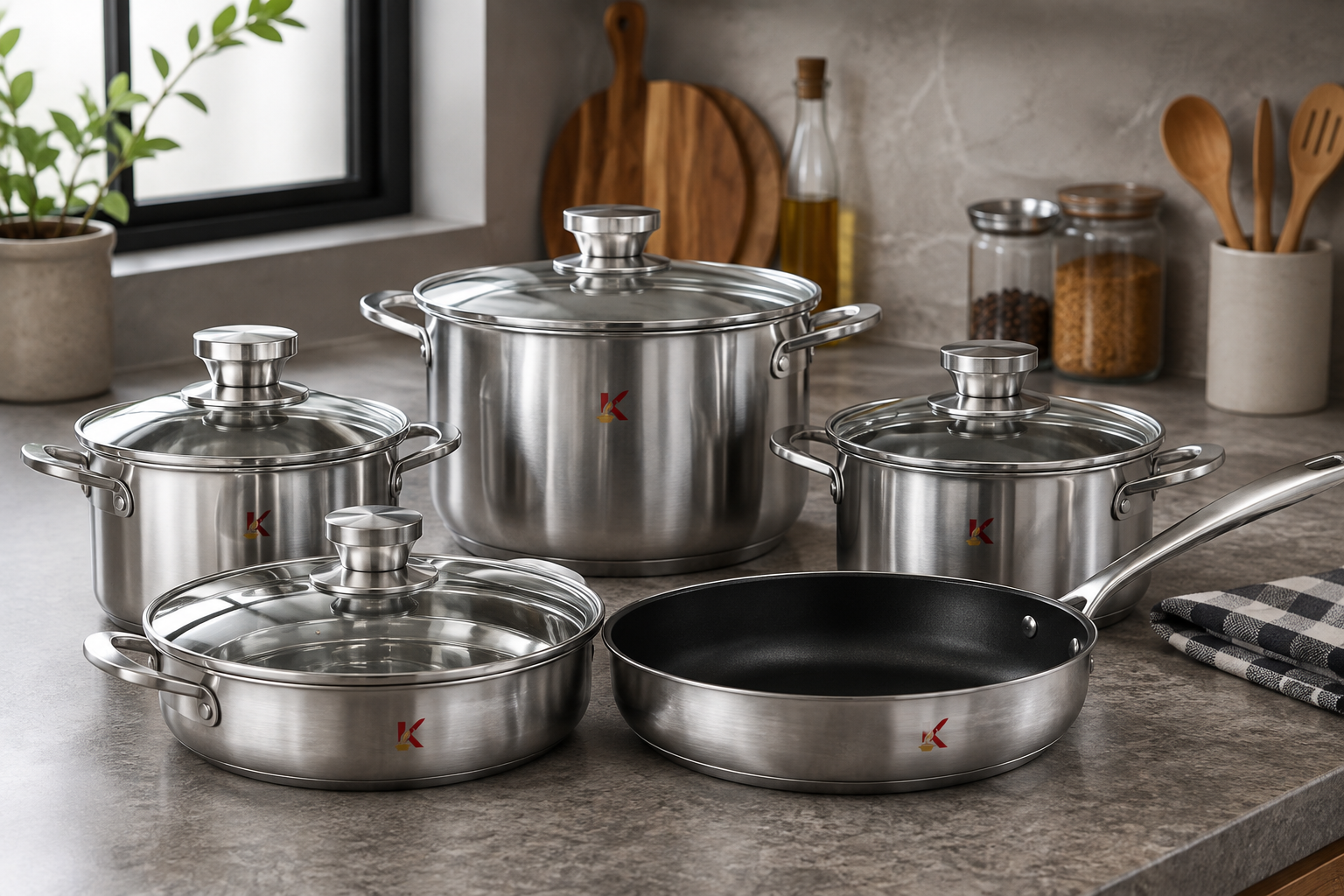
Honestly, I didn’t think much about cookware until I ruined my third non-stick pan in under a year. Same story every time bought something cheap and shiny from a market stall in Rawalpindi, used it for maybe six months, and then watched the coating flake off into my daal like confetti. That’s when a friend who runs a small kitchenware store told me to stop buying random sets and actually look for a metal finish cookware set Pakistan kitchens can handle without falling apart in a season. I rolled my eyes at first. Then I bought one. Big mistake not doing it sooner.
Here’s the thing nobody tells you when you’re shopping for pots and pans here Pakistani kitchens are brutal on cookware. We’re not gently simmering things on low heat like the cooking shows abroad. We’re blasting gas stoves on full flame for karahi, scrubbing burnt milk off pots with steel wool, and stacking pans on top of each other because cabinet space is a myth in most homes. Cookware that isn’t built for that reality just doesn’t survive.
So Why Does Metal Finish Cookware Actually Hold Up Better?
I used to assume “metal finish” was just a marketing word, like when every shampoo suddenly claims to have “keratin.” Turns out there’s a real difference. Metal finish cookware has a tougher outer coating bonded to the base it shrugs off scratches from spoons, doesn’t discolor after a few rounds of high heat, and keeps that clean, almost mirror-like look way longer than the painted or basic aluminum stuff you find at general stores.
My aunt, who’s been cooking for a joint family of nine for something like twenty years, put it simply once: “Beta, buy something once that lasts, instead of buying junk every year.” She wasn’t talking about cookware specifically, but honestly, it applies perfectly here.
What “Durable” Actually Means When You’re Cooking in Pakistan
This is where I think most buying guides get it wrong they compare cookware like everyone’s cooking the same way. We’re not. A set that works fine in a small European kitchen with an induction stove and gentle heat settings is going to buckle under a full-blast gas burner cooking a big pot of biryani for guests.
Real durable non-stick metal cookware needs a thick enough base that heat spreads evenly instead of scorching one spot while the rest stays cold. I learned this the hard way with a cheap pan where the middle would burn while the edges were still raw infuriating when you’re trying to cook rice for twelve people and running out of patience.
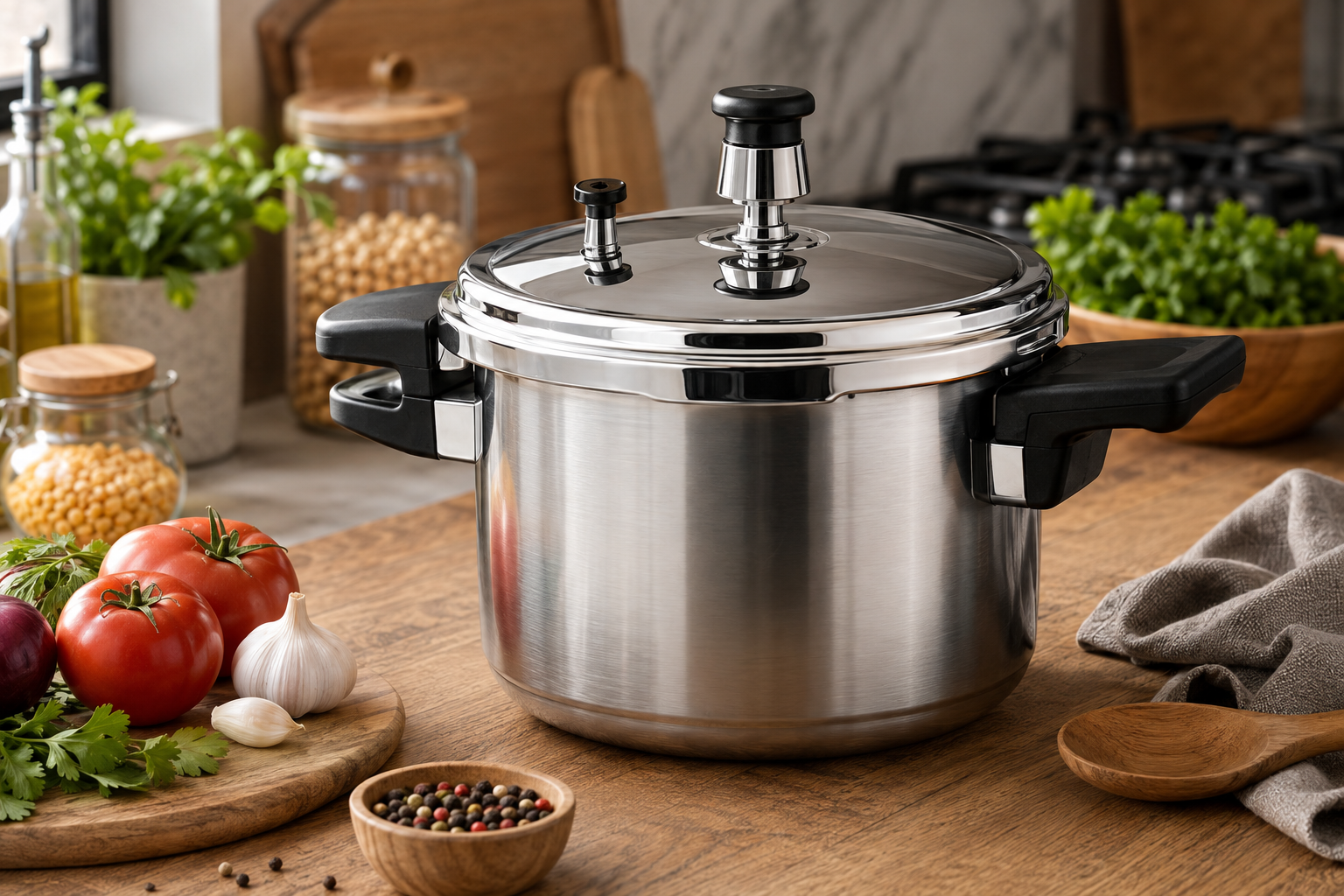
If I can save you one headache, it’s this: pick the set up in the store and actually feel the weight. If it feels suspiciously light, put it back. Thin bases warp fast, and once a pan warps, it wobbles on the stove forever small thing, massive annoyance.
Finding the Best Cookware Set for Your Actual Kitchen, Not a Showroom Kitchen
Everyone wants the best cookware set for kitchen use, but “best” honestly depends on who’s cooking and for how many mouths. A young couple in a two-room flat doesn’t need the same eight-piece monster set that a joint family kitchen does. I’ve seen people get talked into massive bundles because the price-per-piece looked like a steal, only for half the pans to sit untouched in a cupboard collecting dust for years.
What actually gets used, from what I’ve noticed asking around, is usually a big karahi-style pan for daily cooking, one solid pot for daal or curry, and a smaller pan for eggs or quick fry-ups. That’s it. Everything else is often just there to make the box look impressive on the shelf.
Everyday Cooking Wears Things Down Faster Than You’d Think
We don’t think of it this way, but durable kitchen cookware gets abused constantly breakfast paratha, lunch, evening chai, that one late-night omelette everyone pretends they didn’t make. Every single use is another cycle of heating, cooling, scraping, and washing. Cheap cookware just can’t take that kind of punishment for long, which is why people end up replacing pans every year and then complaining that “nothing lasts anymore.”
Something I only figured out after buying my third set the handle matters just as much as the pan itself. A gorgeous, shiny pot with a loose or heat-conducting handle is a burn injury waiting to happen. Riveted, heat-resistant handles aren’t a fancy extra; they’re the difference between cookware you trust and cookware you’re scared to pick up.
A Word on the K4Kitchen Metal Finish Collection
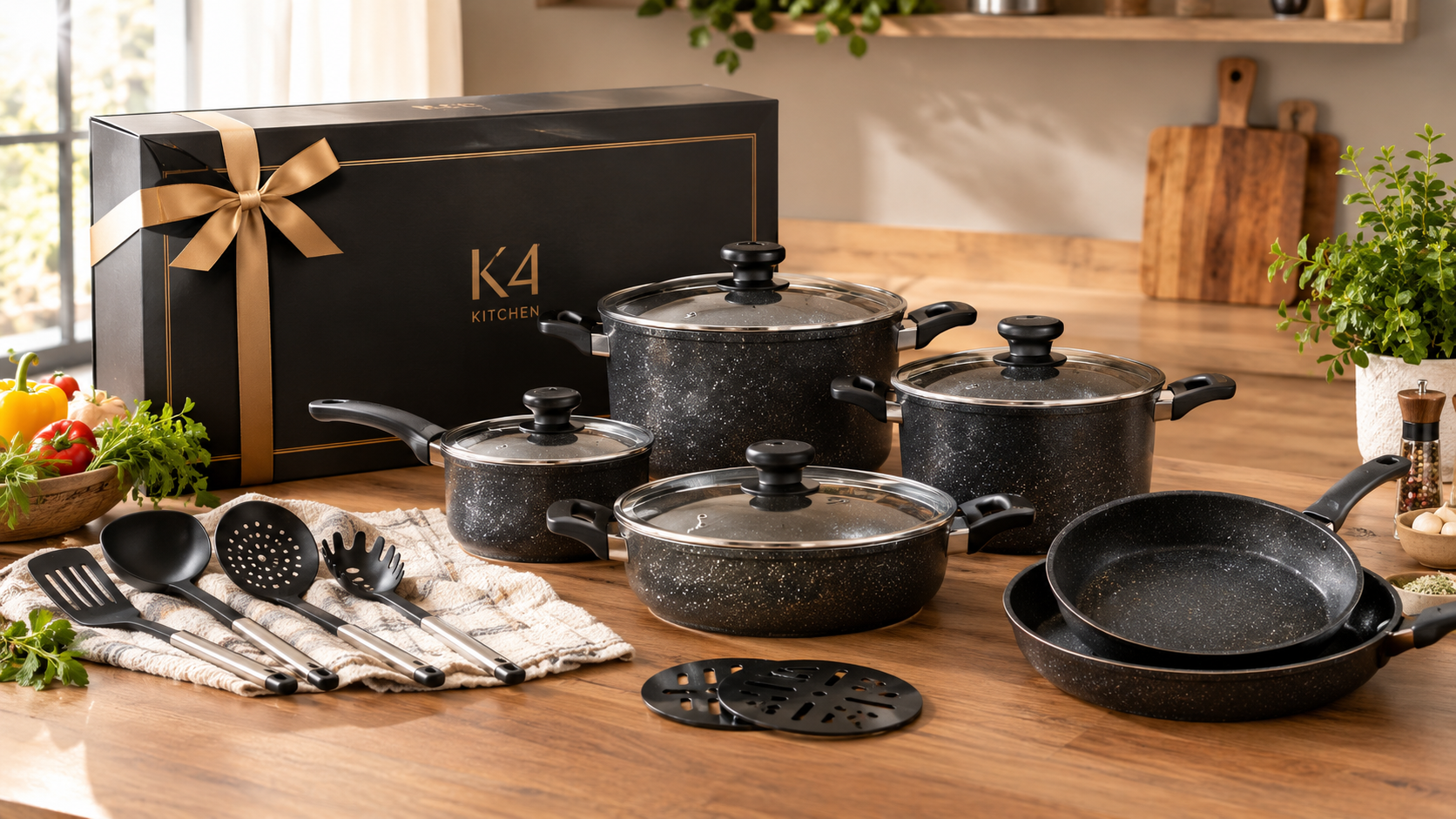
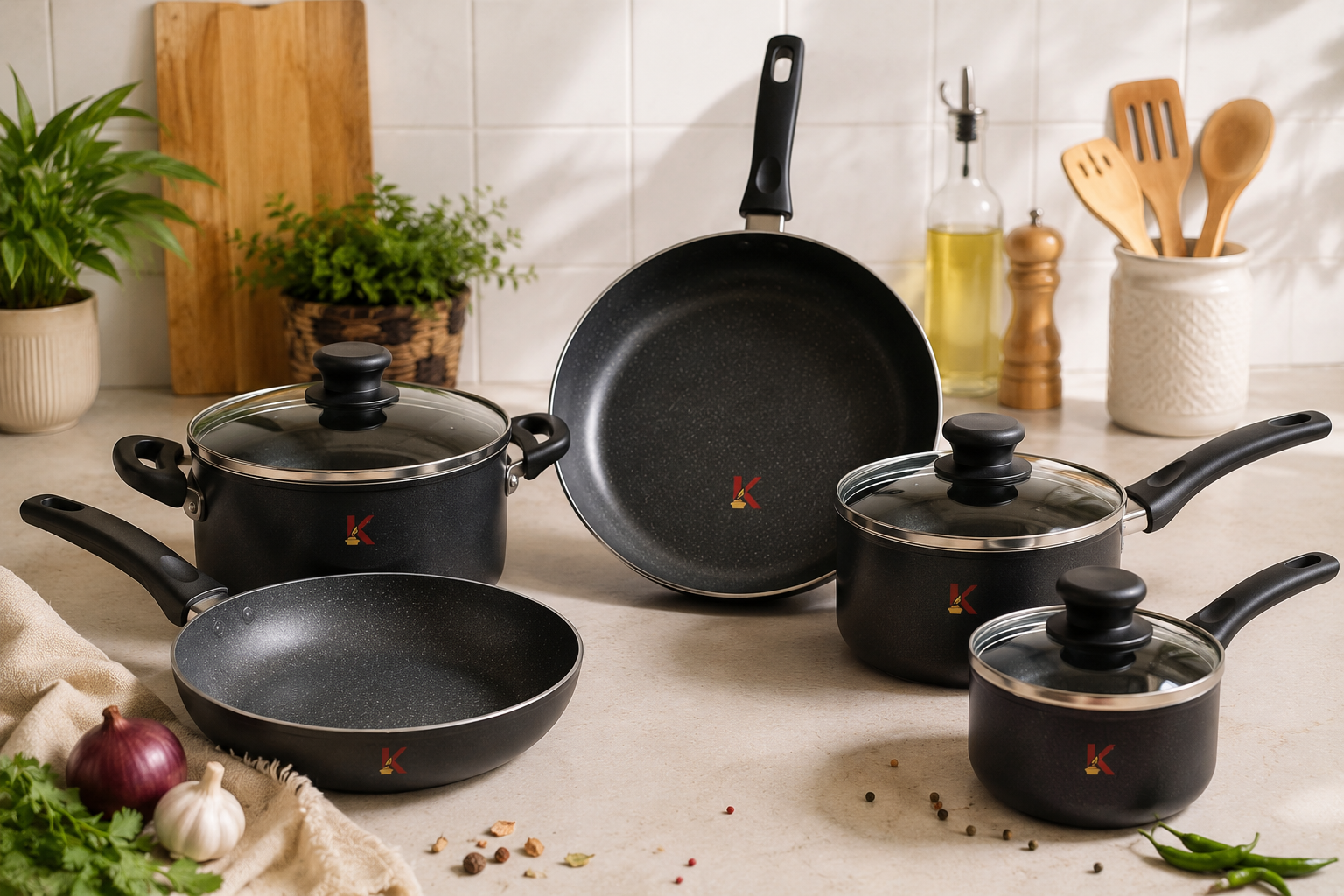
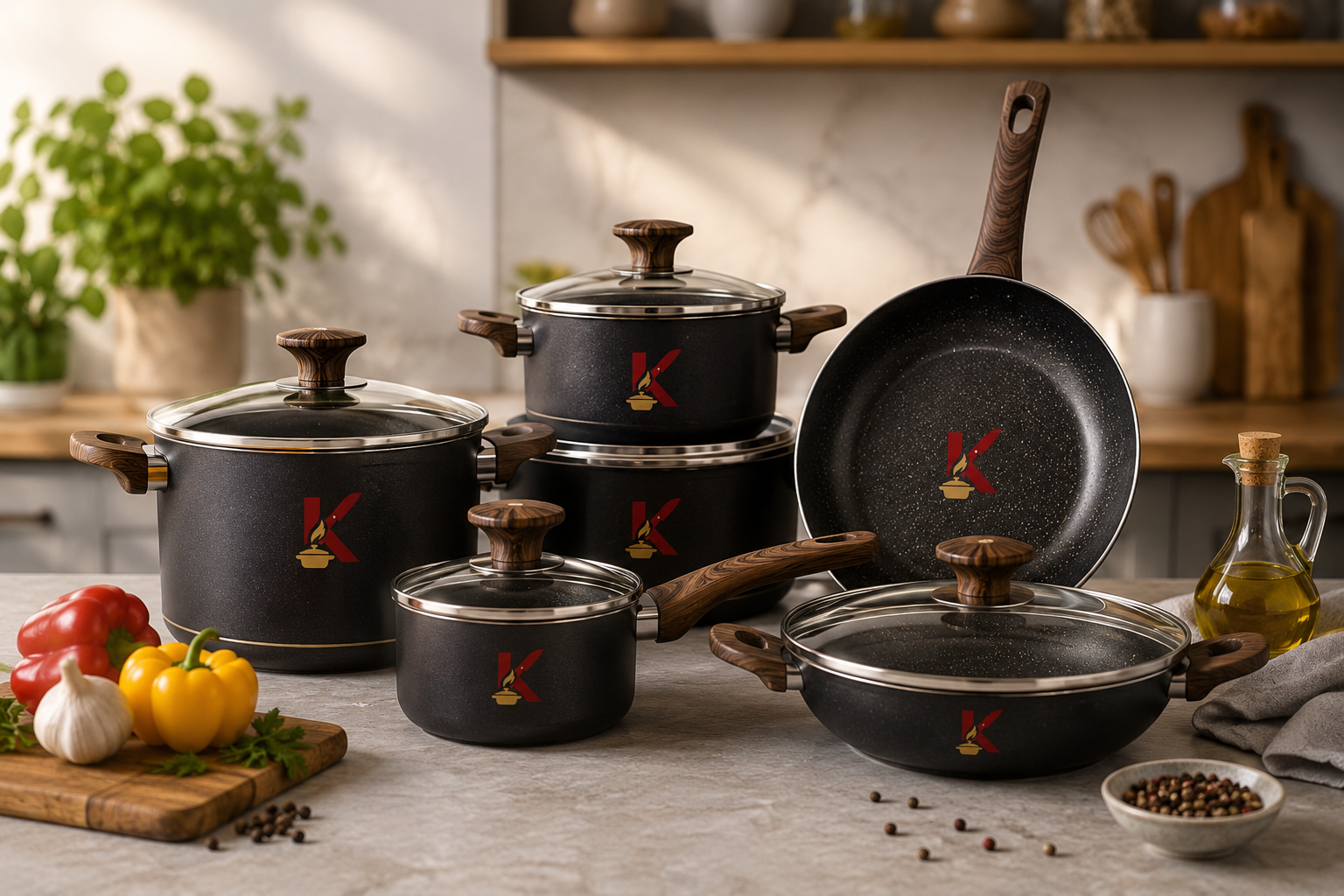
I came across the K4Kitchen metal finish collection while comparing options for my own kitchen upgrade, and what stood out wasn’t flashy marketing it was that the pieces actually seemed built with local cooking habits in mind. Thick enough bases for full-flame karahi cooking, a finish that isn’t scared of steel wool, and a set size that doesn’t overwhelm you with pans you’ll never touch.
I’ll be upfront I’m not going to pretend one collection magically solves every kitchen problem. But compared to the random generic sets flooding local markets, this one felt like it was designed by someone who’s actually cooked biryani for fifteen relatives on a Sunday, not just someone designing for a catalog photo.
Mistakes I See People Make Constantly
The biggest one? Judging cookware purely by how it looks under shop lighting. Two pans can look identical on a shelf and still be completely different once you get them home one with a proper thick base, the other basically foil with a fancy coat of paint. You can’t tell the difference just by looking, which is annoying, but it’s the truth.
Another mistake ignoring your actual stove. Gas-heavy Pakistani kitchens need cookware that spreads heat wide, not the tighter, concentrated heat that electric or induction stoves abroad are built around. And honestly, even the best set won’t survive careless use metal spatulas scraping non-stick surfaces, stacking pans without any protection between them, or leaving an empty pot on high flame while you answer a phone call. No metal finish cookware set Pakistan shoppers buy is going to survive that kind of treatment forever, no matter how good it is.
Wrapping This Up
Cookware isn’t glamorous, but it’s something you touch every single day, sometimes multiple times a day, so it’s worth actually thinking about before you buy. Spend the extra ten minutes checking base thickness, handle quality, and finish durability instead of grabbing whatever’s cheapest at the counter. My kitchen upgrade wasn’t dramatic, but not replacing pans every year has genuinely made cooking less stressful. If you’ve got a set you swear by, or one you regret buying, drop it in the comments I’m always curious what’s actually holding up out there.
Frequently Asked Questions
Is metal finish cookware safe for daily cooking?
Yes, as long as it’s made with a solid base metal and proper coating, it handles daily Pakistani cooking, including high-flame karahi and curry dishes, without any safety concerns.
How long does durable non-stick metal cookware usually last?
With reasonable care wooden or silicone utensils, avoiding empty pots left on high heat a good quality set can realistically last three to five years, sometimes longer.
What size cookware set actually makes sense for a Pakistani household?
It really depends on family size, but most homes get more use out of one large karahi-style pan, a mid-sized pot, and a smaller pan than out of a big generic bundle.
Will metal finish cookware warp on a gas stove?
Well-made sets with thicker bases are built specifically to handle gas stove flames and resist warping far better than thin, lightweight cookware does.
Is a full cookware set actually worth buying, or should I just get individual pieces?
If you’re realistically going to use most of the pieces, a set makes sense. If not, buying two or three solid individual pieces is usually the smarter, more cost-effective move.